AI Training for Teachers and Assessors

Practical AI capability for Vocational Education, FE and HE.

A comprehensive, role-relevant curriculum helping teachers, assessors and IQAs use AI responsibly, improve learning and assessment, reduce administration and protect professional judgement.

12 Modules Foundations, teaching, assessment, quality and advanced implementation.
Role Pathways Clear routes for teachers, assessors, IQAs and education leaders.
Practical Portfolio Workplace evidence that demonstrates responsible application.
Accredited CPD

CPD programmes accredited by an approved UK awarding body.

This gives organisations extra confidence that HHF Training CPD is structured, professionally designed and suitable for staff development records.

UK

Approved awarding body recognition

HHF Training CPD programmes are accredited through an approved UK awarding body, giving the training stronger credibility for organisations and staff teams.

CPD

Useful for staff development records

Accredited CPD helps schools, colleges and providers evidence professional learning, support internal CPD logs and show commitment to responsible AI capability.

QA

Structured and outcome-focused

The programme is designed around clear learning aims, practical outcomes and education-relevant content rather than informal awareness alone.

Who It Supports

Built for education teams at different levels of AI confidence.

The training can be adapted for beginners, experienced staff, leaders, assessors, IQAs and teams that need a shared organisational approach to AI.

01

Teachers and Lecturers

Understand how AI can support planning, explanations, resources, differentiation, feedback preparation and administrative workload without replacing professional judgement.

02

Leaders and Managers

Develop confidence around AI adoption, staff guidance, risk management, policy expectations, safeguarding considerations and responsible implementation.

03

Assessors and IQAs

Explore AI risks in learner evidence, authenticity, professional discussion, observation, mapping, feedback and internal quality assurance.

04

Curriculum Teams

Review how AI affects schemes of work, learning activities, independent study, digital skills and learner employability.

05

Support Staff

Use AI to improve everyday productivity, communication, document drafting, learner support and safer digital practice.

06

Training Providers

Strengthen staff CPD, assessment design, evidence tracking, quality assurance and learner guidance in the AI era.

Problems It Solves

Clear training for the AI questions education organisations are facing now.

Many teams know AI matters, but they need practical answers. This page is designed to make the offer easy to understand before an organisation makes contact.

Staff are unsure where to start

Many educators have heard about AI tools but are unsure what is useful, what is risky and what is appropriate in education.

Learner use is unclear

Teams need consistent guidance on acceptable AI use, independent work, evidence, authenticity and academic integrity.

Assessment needs protection

AI can create new risks for written work, portfolios and assignments. Staff need practical ways to design more authentic assessment.

Policies need translating into practice

Even where AI policies exist, staff often need examples, scenarios and shared language to apply them confidently.

Complete Curriculum

One shared foundation with clear professional pathways.

The curriculum progresses from essential AI understanding to role-specific teaching, assessment, quality assurance and organisational implementation. Participants build practical evidence throughout rather than learning tools in isolation.
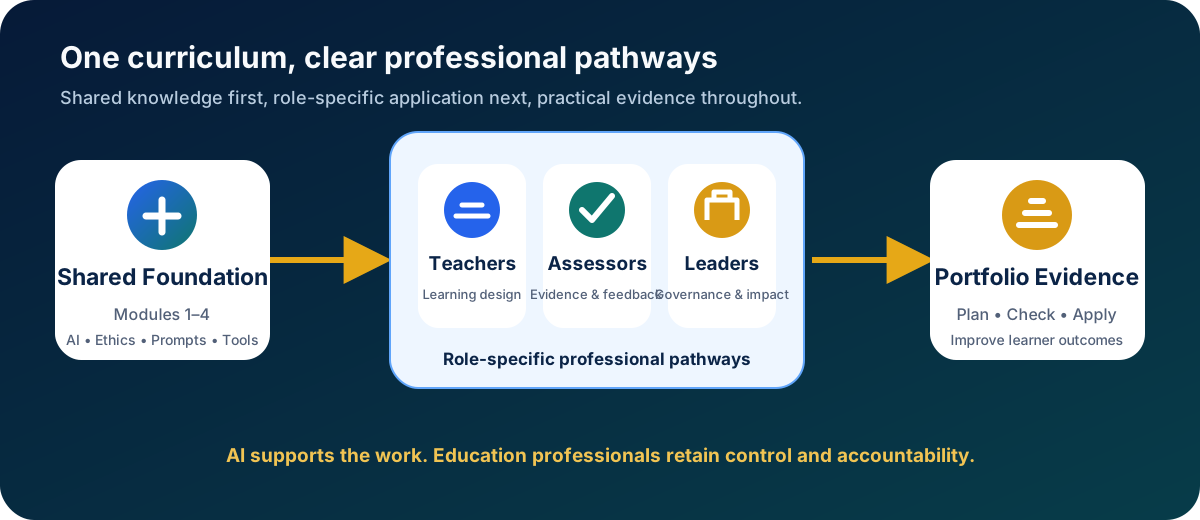
Diagram showing shared AI foundations leading to Teacher, Assessor and Leadership pathways, followed by practical portfolio evidence
All participants build the same responsible AI foundation before applying it through the pathway most relevant to their professional role.
Modules 1–4

Shared Foundation

Essential knowledge, responsible practice, prompt design and critical tool evaluation for every participant.

Modules 5–11

Professional Pathways

Teaching, learner support, assessment, vocational practice, FE/HE applications and quality assurance.

Module 12

Optional Leadership

Advanced assistants, governance, adoption, impact measurement and organisational implementation.

Showing all 12 modules.

01BeginnerShared Foundation

AI Foundations for Education

Understand how modern AI works, where it helps and where professional checking is essential.

Establish accurate shared language and the confidence to evaluate AI outputs without accepting them at face value.

Learning objectives

  • Explain AI, machine learning, generative AI and large language models.
  • Distinguish generation from human understanding.
  • Identify suitable and unsuitable educational uses.
  • Recognise hallucination, uncertainty and outdated knowledge.
  • Describe likely developments affecting education and employment.

Topics covered

  • Core terminology, training data, prompts, tokens and outputs.
  • Capabilities, limitations, myths and misconceptions.
  • Verification, source checking and critical AI literacy.
  • Future trends in education and AI-enabled workplaces.

Practical activities

  • Compare varied responses to the same education question.
  • Verify an output against trusted curriculum or awarding-body sources.
  • Classify workplace tasks by opportunity, risk and oversight.

Educational examples

  • A vocational tutor checks an explanation against a qualification specification.
  • An FE lecturer identifies fabricated references.
  • An HE team considers changing graduate skill requirements.

Outcomes and portfolio evidence

  • Explain AI accurately to colleagues and learners.
  • Produce an AI terminology guide and annotated output evaluation.
  • Identify appropriate role-specific uses and controls.

Professional checkpoint

  • AI output remains draft material until verified.
  • High-impact decisions remain with authorised professionals.
  • Related modules: 2, 3, 4 and 12.
02BeginnerShared Foundation

Ethics, Safeguarding and Data Protection

Apply responsible AI principles to learner data, safeguarding, fairness and educational decisions.

Recognise legal, ethical and safeguarding risks before using AI with educational information or learner-facing activity.

Learning objectives

  • Identify personal, special-category and confidential data.
  • Apply data-minimisation and approved-system principles.
  • Recognise bias, exclusion and accessibility risks.
  • Evaluate safeguarding and wellbeing scenarios.
  • Use escalation and incident-reporting routes.

Topics covered

  • UK GDPR principles, privacy, confidentiality and retention.
  • Intellectual property and ownership.
  • Safeguarding, vulnerable learners and wellbeing boundaries.
  • Bias, fairness, accessibility and reasonable adjustment.
  • Responsible-use policies and risk registers.

Practical activities

  • Redact and anonymise a fictional learner case.
  • Complete an AI task risk assessment.
  • Review a generated resource for bias and access barriers.

Educational examples

  • An assessor avoids uploading identifiable portfolio evidence.
  • An FE team checks a generated wellbeing message.
  • An HE lecturer reviews examples for demographic bias.

Outcomes and portfolio evidence

  • Decide when AI use is inappropriate or requires approval.
  • Produce a risk assessment and safe-use checklist.
  • Draft role-relevant responsible-use guidance.

Professional checkpoint

  • No identifiable data enters an unapproved system.
  • Safeguarding concerns follow established designated routes.
  • Related modules: 1, 6, 7, 11 and 12.
03Beginner–IntermediateShared Foundation

Prompt Design for Educators

Create reusable, structured instructions that produce relevant and reviewable outputs.

Move beyond simple questions towards controlled prompts with context, criteria, constraints and visible quality checks.

Learning objectives

  • Use role, task, context, audience and output requirements.
  • Break complex work into staged tasks.
  • Set standards, examples and exclusions.
  • Refine outputs through evaluation and iteration.
  • Create reusable department prompt templates.

Topics covered

  • Prompt anatomy and role-based context setting.
  • Structured outputs, criteria and examples.
  • Staged prompting, follow-up questions and revision.
  • Assessment, feedback and resource prompts.
  • Prompt libraries, version control and quality notes.

Practical activities

  • Improve a weak prompt using a structured framework.
  • Create teacher and assessor templates for repeated tasks.
  • Review an output against a supplied quality rubric.

Educational examples

  • A teacher requests differentiated examples aligned to outcomes.
  • An assessor drafts neutral discussion questions.
  • An IQA creates an agenda from non-confidential themes.

Outcomes and portfolio evidence

  • Produce clearer, more consistent outputs.
  • Create a prompt library with inputs and checking notes.
  • Submit before-and-after prompts with evaluation commentary.

Professional checkpoint

  • Prompts request structured outputs, not hidden reasoning.
  • Materials are checked against source requirements.
  • Related modules: 1, 4, 5, 7, 8 and 11.
04Beginner–IntermediateShared Foundation

AI Tools and Critical Evaluation

Select tools by educational need, information risk, accessibility and evidence quality.

Build transferable selection skills while treating current platforms as examples rather than permanent dependencies.

Learning objectives

  • Compare general and specialist AI tool categories.
  • Select tools using purpose, privacy, access and quality criteria.
  • Evaluate citations, evidence and generated media.
  • Recognise platform settings and restrictions.
  • Document decisions and alternatives.

Topics covered

  • ChatGPT, Copilot and Gemini as current examples.
  • Research, presentation, video, assessment and accessibility tools.
  • Accounts, data handling and multimodal inputs.
  • Generated-media provenance and tool evaluation scorecards.

Practical activities

  • Compare two approved tools on a low-risk task.
  • Complete a tool-selection scorecard.
  • Verify an AI research summary and its sources.

Educational examples

  • A lecturer selects an accessibility tool for alternative formats.
  • A vocational team compares presentation tools.
  • An HE researcher rejects unsupported citations.

Outcomes and portfolio evidence

  • Choose tools because they fit the task and controls.
  • Produce a comparison scorecard and recommendation.
  • Record limitations, checking needs and fallback options.

Professional checkpoint

  • Named platforms remain subject to organisational approval.
  • Features, terms and privacy arrangements are checked.
  • Related modules: 1, 2, 3 and 12.
05IntermediateTeacher Pathway

Curriculum and Learning Design

Support constructive alignment, sequencing, lesson planning and resource development.

Improve planning efficiency while keeping curriculum intent, subject expertise and pedagogical judgement with the educator.

Learning objectives

  • Map outcomes, activities and assessment.
  • Create and critique schemes of work and lesson plans.
  • Sequence learning towards independent application.
  • Generate adaptable resources and knowledge checks.
  • Review accuracy, level and curriculum coverage.

Topics covered

  • Constructive alignment and curriculum mapping.
  • Learning outcomes and success criteria.
  • Schemes of work, lesson structures and retrieval practice.
  • Presentations, scenarios, worksheets and resources.
  • Differentiation, scaffolding and quality review.

Practical activities

  • Develop a mapped lesson from approved outcomes.
  • Generate a resource and annotate professional changes.
  • Use a coverage matrix to find gaps or duplication.

Educational examples

  • A vocational tutor maps workshop activities to criteria.
  • An FE lecturer creates recap and extension tasks.
  • An HE lecturer develops an aligned seminar plan.

Outcomes and portfolio evidence

  • Create aligned, purposeful plans efficiently.
  • Produce a curriculum map, lesson plan and reviewed resource.
  • Explain where professional changes were required.

Professional checkpoint

  • Approved specifications override generated content.
  • The educator owns curriculum coverage and pedagogy.
  • Related modules: 3, 6, 7 and 10.
06IntermediateTeacher Pathway

Inclusive Teaching and Learner Support

Improve access, differentiation and independence without automating sensitive support decisions.

Broaden access and create adaptable support while respecting SEND expertise, reasonable adjustments and wellbeing boundaries.

Learning objectives

  • Adapt explanations and scaffolds for varied starting points.
  • Create accessible resources.
  • Support English, maths, study skills and independence.
  • Plan personalised pathways with oversight.
  • Recognise when specialist support is required.

Topics covered

  • SEND-aware planning and reasonable adjustments.
  • Reading level, language and alternative formats.
  • Personalised and adaptive approaches.
  • Study skills, coaching and learner agency.
  • Engagement, retention and wellbeing boundaries.

Practical activities

  • Redesign a resource using an accessibility checklist.
  • Create scaffolded tasks without lowering outcomes.
  • Review a learner-support response for risk and tone.

Educational examples

  • A vocational learner uses a visual task sequence.
  • An FE student receives plain-English vocabulary support.
  • An HE student uses structured study prompts.

Outcomes and portfolio evidence

  • Develop inclusive resources with clearer access points.
  • Produce an adapted resource and accessibility review.
  • Create a support prompt with escalation boundaries.

Professional checkpoint

  • AI does not diagnose needs or determine adjustments.
  • Support decisions remain professionally authorised.
  • Related modules: 2, 5, 7 and 10.
07IntermediateShared Practice

Assessment Design and Academic Integrity

Design valid assessment that protects authenticity and responds proportionately to AI.

Strengthen assessment through authentic design, clear AI expectations and multiple sources of evidence rather than relying on detection.

Learning objectives

  • Create formative and summative tasks aligned to outcomes.
  • Develop question banks, rubrics and criteria.
  • Increase authenticity through process and performance evidence.
  • Set permitted, restricted and declarable AI use.
  • Plan fair responses to integrity concerns.

Topics covered

  • Validity, reliability and sufficiency.
  • Authentic and AI-resilient task design.
  • Rubrics, adjustments and accessibility.
  • Attribution, declarations and process evidence.
  • AI-detection limitations and fair investigation.

Practical activities

  • Redesign a vulnerable assessment.
  • Generate and check a question bank and rubric.
  • Draft learner AI-use and declaration guidance.

Educational examples

  • A vocational task combines product evidence and questioning.
  • An FE assignment includes staged drafts.
  • An HE assessment includes method justification and viva.

Outcomes and portfolio evidence

  • Produce clearer, more authentic assessment.
  • Submit a redesigned task, rubric and AI-use statement.
  • Document alignment, accessibility and integrity checks.

Professional checkpoint

  • AI detection alone is not proof of misconduct.
  • Decisions follow approved regulations and fair process.
  • Related modules: 2, 5, 8, 9, 10 and 11.
08IntermediateAssessor / IQA Pathway

Assessment Practice and Feedback

Support evidence review, questioning, feedback and progress monitoring while preserving judgement.

Reduce repetitive administration and strengthen consistency without delegating assessment decisions to an AI system.

Learning objectives

  • Plan assessment around standards and evidence.
  • Organise evidence-review questions and feedback drafts.
  • Support portfolios, observations and discussions.
  • Monitor progress and evidence gaps.
  • Record defensible professional decisions.

Topics covered

  • Assessment planning and holistic opportunities.
  • Portfolio review, mapping and evidence tracking.
  • Observation and professional discussion.
  • Feedback quality and learner progress.
  • VARCS principles and assessor administration.

Practical activities

  • Create a mapped assessment plan.
  • Draft and de-bias professional-discussion questions.
  • Improve feedback against evidence and criteria.

Educational examples

  • An apprentice assessor identifies evidence gaps.
  • An FE assessor prepares neutral follow-up questions.
  • An HE marker structures feedback themes without automated grading.

Outcomes and portfolio evidence

  • Improve consistency and reduce administration.
  • Produce an assessment plan, tracker and checked feedback.
  • Record evidence supporting each decision.

Professional checkpoint

  • AI does not grade, determine competence or authenticate evidence.
  • The assessor owns the final decision.
  • Related modules: 3, 7, 9 and 11.
09Intermediate–AdvancedVocational Pathway

Vocational and Apprenticeship Applications

Apply AI to occupational learning, workplace evidence, employer engagement and EPA readiness.

Connect AI literacy with occupational competence without confusing generated explanation with demonstrated skill.

Learning objectives

  • Map occupational standards to learning and evidence.
  • Support work-based learning and portfolios.
  • Plan practical observation and competence questioning.
  • Strengthen employer communication.
  • Prepare learners for EPA and AI-enabled workplaces.

Topics covered

  • Apprenticeship delivery and off-the-job links.
  • Occupational competence and practical evidence.
  • Work products, witnesses and professional discussion.
  • Employer engagement and industry use cases.
  • EPA preparation and future skills.

Practical activities

  • Map a standard to learning, workplace activity and evidence.
  • Create employer guidance on AI-supported evidence.
  • Develop an EPA-style practice activity without live materials.

Educational examples

  • A construction apprentice explains practical decisions.
  • A business apprentice declares AI support in a document.
  • A digital learner critiques industry AI use.

Outcomes and portfolio evidence

  • Align AI use with genuine occupational performance.
  • Produce a standards map, employer guide and competence activity.
  • Document how authenticity will be confirmed.

Professional checkpoint

  • Generated text cannot replace observed competence.
  • EPA and awarding requirements are checked at source.
  • Related modules: 7, 8, 10 and 11.
10Intermediate–AdvancedFE / HE Pathway

FE and HE Applications

Support research, academic learning, tutorials and student independence with transparent AI use.

Guide students towards critical, attributable and independent academic practice rather than outsourced thinking or writing.

Learning objectives

  • Support academic content and seminar preparation.
  • Guide research questions, searches and source evaluation.
  • Support writing without producing assessed work.
  • Develop tutorials and independent-learning strategies.
  • Apply transparent integrity expectations.

Topics covered

  • Research scoping and literature-review support.
  • Citation verification and source provenance.
  • Academic writing guidance and feedback boundaries.
  • Tutorials, engagement and study planning.
  • Authorship, attribution and discipline-specific integrity.

Practical activities

  • Critique a literature summary against original sources.
  • Create a verification and attribution tutorial.
  • Develop guidance for permitted academic AI support.

Educational examples

  • An FE learner checks technical claims.
  • An HE student refines search terms then reads original research.
  • A lecturer compares human and AI interpretations.

Outcomes and portfolio evidence

  • Support research literacy and independence.
  • Produce a source-evaluation activity and AI guidance.
  • Document boundaries between guidance and authorship.

Professional checkpoint

  • References are verified in original credible sources.
  • Students retain authorship and follow regulations.
  • Related modules: 2, 5, 6 and 7.
11AdvancedQuality / Compliance

Quality Assurance, Compliance and Productivity

Strengthen standardisation, IQA, documentation and improvement with auditable oversight.

Improve consistency and efficiency while maintaining reliable records, role separation and accountable quality decisions.

Learning objectives

  • Support standardisation and risk-based IQA planning.
  • Improve evidence tracking and action monitoring.
  • Draft reports, summaries and observation documentation.
  • Support SAR, QIP and audit readiness.
  • Create controls for AI-supported workflows.

Topics covered

  • IQA sampling, CAMERA coverage and standardisation.
  • Audit trails, document control and tracking.
  • SAR/QIP analysis, reports and action plans.
  • Meetings, emails, policies and observation notes.
  • Risk, regulatory awareness and compliance checks.

Practical activities

  • Create a risk-based IQA plan from fictional data.
  • Turn notes into a verified action log.
  • Review a policy draft for gaps and approval needs.

Educational examples

  • An IQA groups themes without exposing learner data.
  • An FE lead drafts QIP actions from verified evidence.
  • An HE team organises programme-review themes.

Outcomes and portfolio evidence

  • Create clearer records and consistent workflows.
  • Produce a quality record, risk plan and action tracker.
  • Document approval, storage and review controls.

Professional checkpoint

  • AI makes no IQA, audit or regulatory judgement.
  • Current official requirements are checked.
  • Related modules: 2, 7, 8, 9 and 12.
12AdvancedOptional Leadership

Advanced AI and Organisational Implementation

Develop governed assistants, workflows, strategy and sustainable responsible adoption.

Move from isolated experimentation to controlled, measurable and maintainable organisational practice.

Learning objectives

  • Evaluate custom assistants, knowledge bases and agents.
  • Develop an AI strategy and prioritised roadmap.
  • Plan governance, ownership and approvals.
  • Support adoption, capability and change.
  • Measure educational value, efficiency, risk and ROI.

Topics covered

  • Custom GPT-style assistants and approved sources.
  • Agents, automation and workflow integration.
  • Knowledge management and access control.
  • Strategy, policy, staff development and culture.
  • Impact measures and future technologies.

Practical activities

  • Design a low-risk assistant with source controls.
  • Create a value, effort and risk use-case register.
  • Build a phased roadmap with measures and owners.

Educational examples

  • A provider grounds an assistant in approved guidance.
  • An FE group measures time saved and quality.
  • An HE institution governs role-based use.

Outcomes and portfolio evidence

  • Prioritise sustainable, governed adoption.
  • Produce a use-case register, roadmap and impact framework.
  • Define ownership, review dates and stop criteria.

Professional checkpoint

  • Automation has owners, intervention and audit routes.
  • Higher-risk uses receive governance review.
  • Related modules: 1–4 and 11.

See the curriculum in practice.

These visual examples connect the modules to real educational planning, activity design, assessment and professional control.
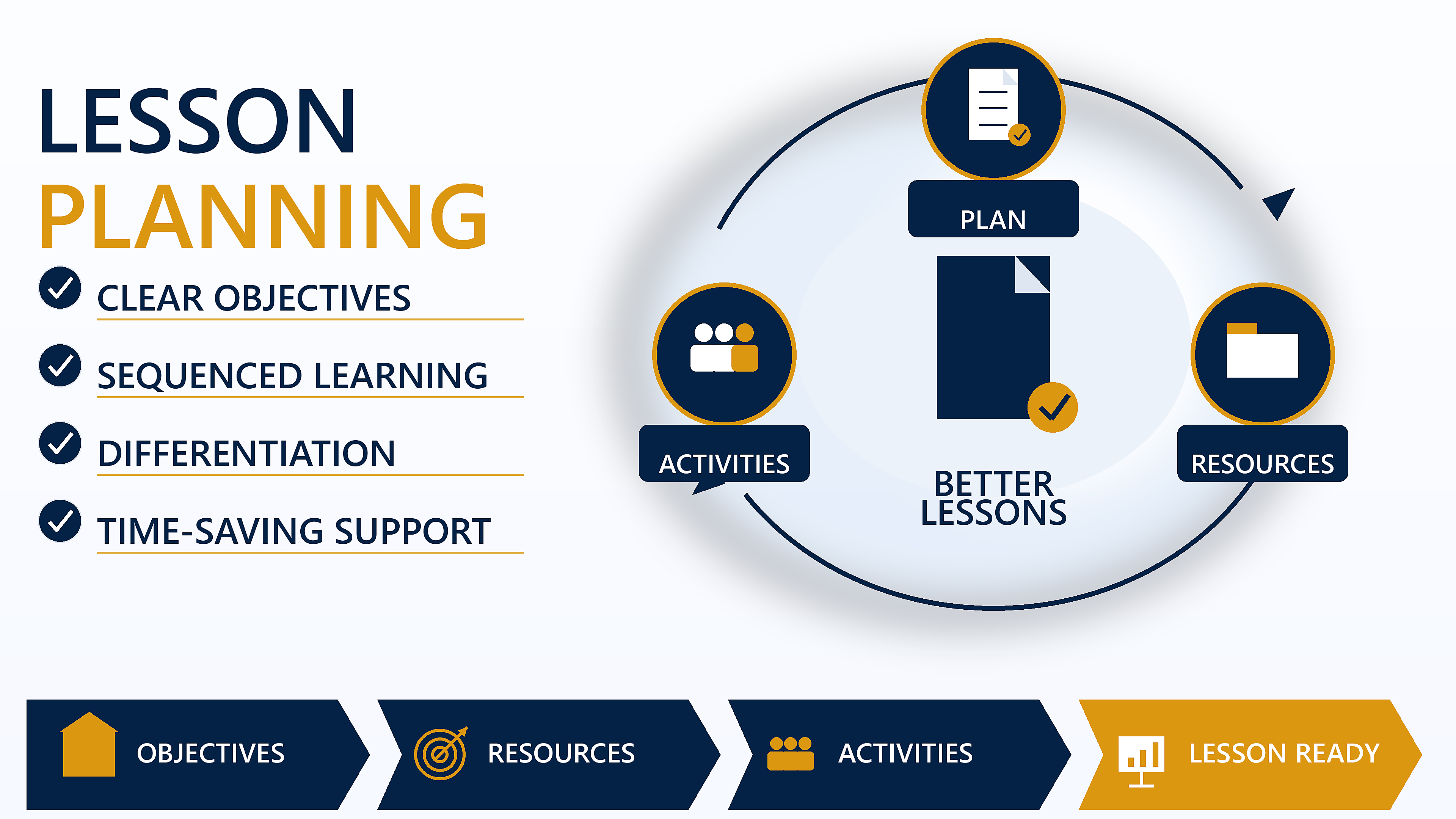
Lesson planning diagram connecting objectives, resources and activities to a lesson-ready plan
Curriculum and lesson planningAI can help organise objectives, resources and activities, while the teacher checks sequencing, differentiation and subject accuracy.
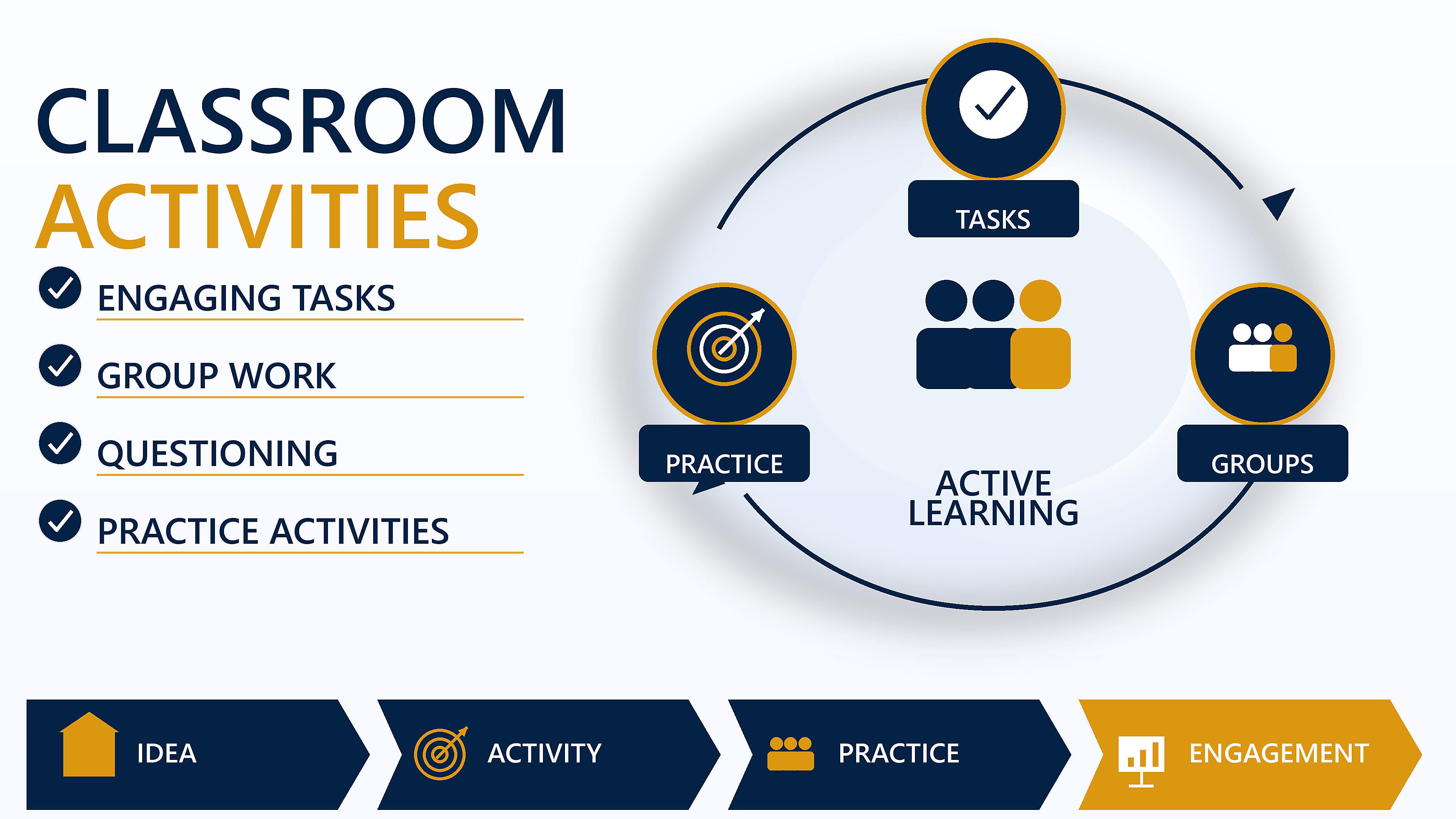
Active learning diagram showing tasks, group work and practice leading to learner engagement
Active and inclusive learningGenerated ideas become useful only when educators adapt them to learner needs, accessibility requirements and intended outcomes.
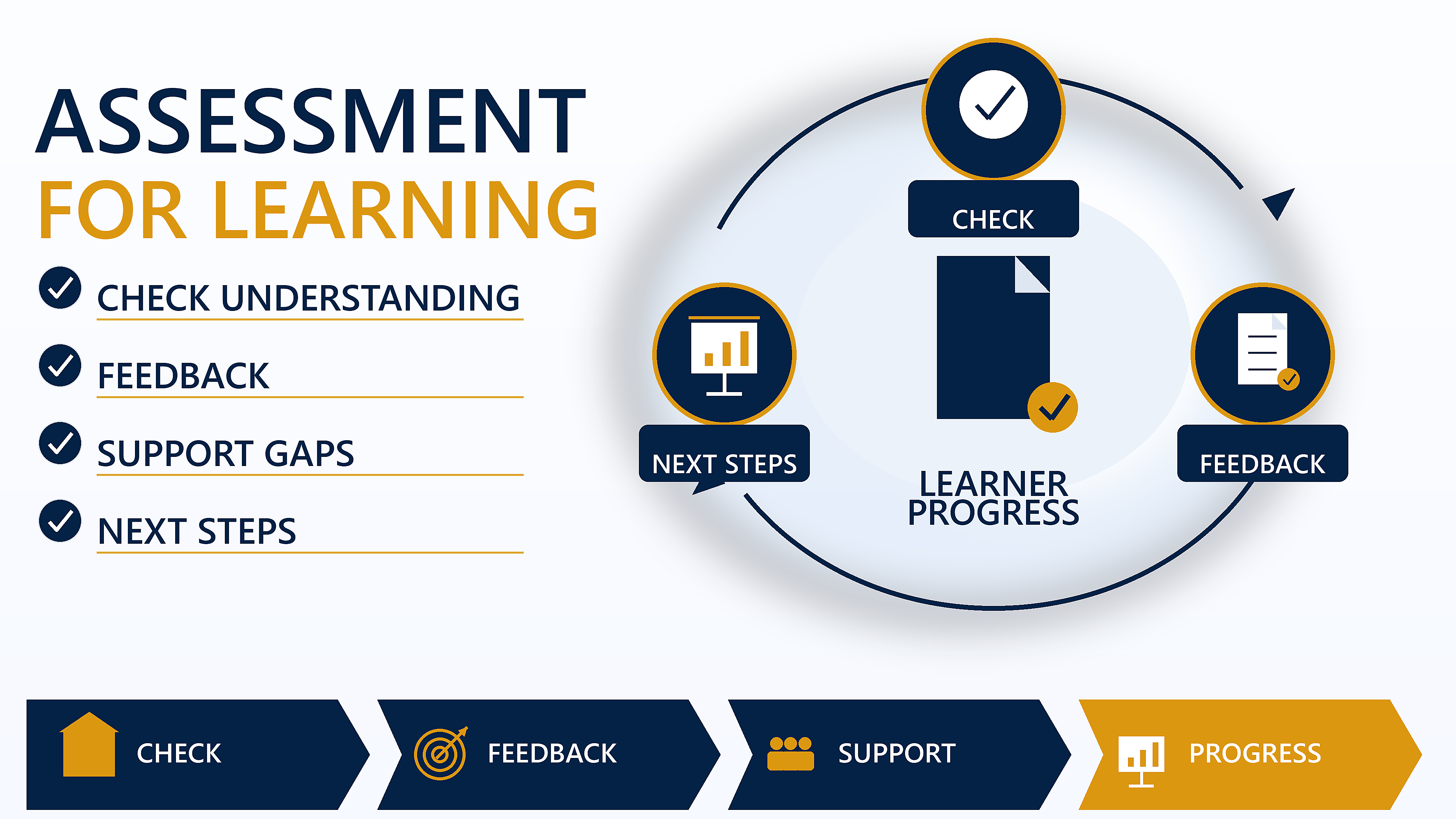
Assessment for learning diagram showing checking, feedback, support and learner progress
Assessment for learningAI may support questions and feedback drafts, but evidence checking, assessment decisions and next steps remain professional responsibilities.
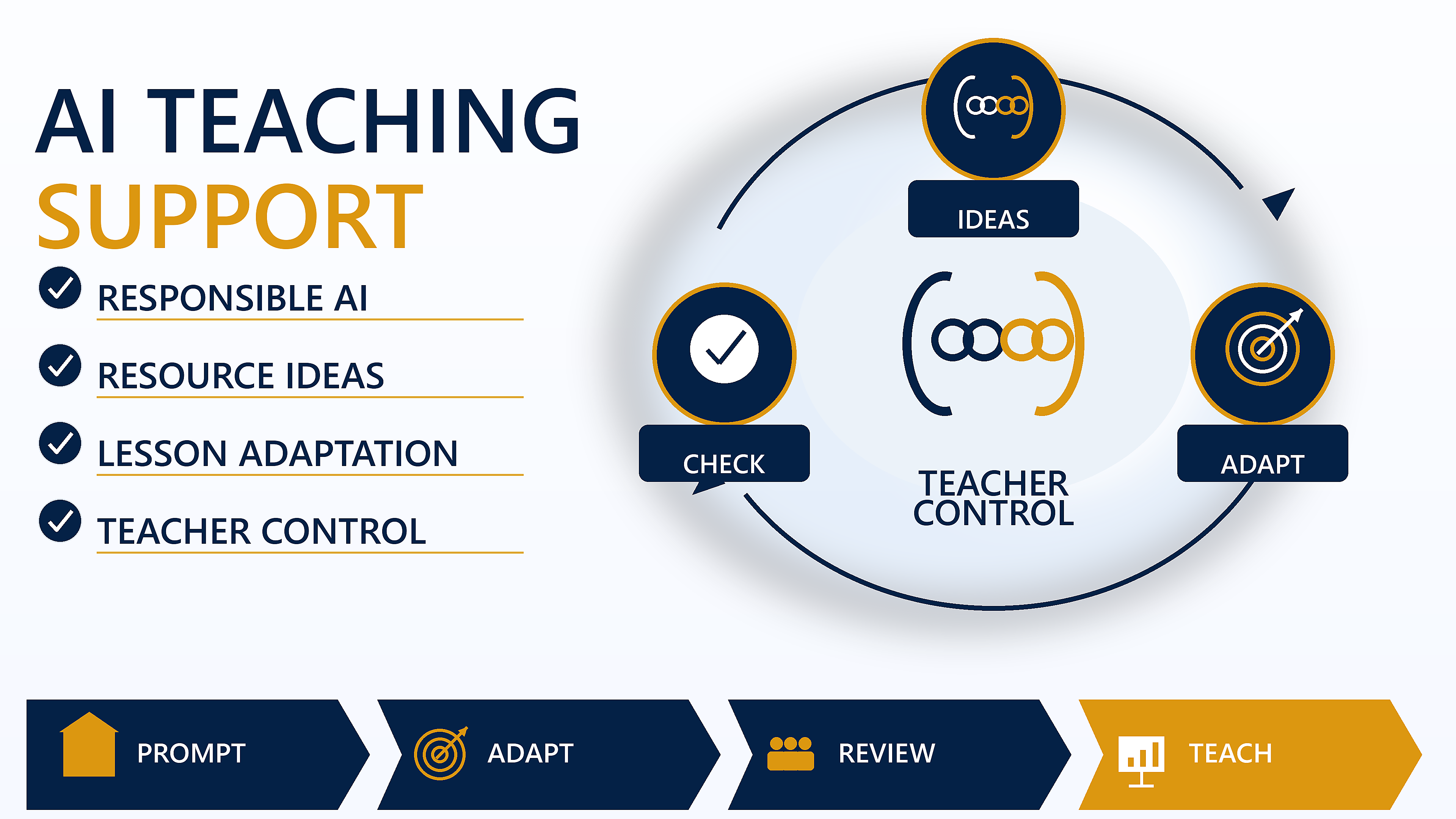
AI teaching support diagram showing ideas, checking and adaptation under teacher control
AI support under professional controlThe safe pattern is prompt, review, adapt and approve. AI assists the process without replacing educator judgement.
Expected Professional Outcomes

Confident practice, stronger evidence and better learner outcomes.

Participants progress from understanding AI to applying it safely in their own role, with visible evidence of quality, compliance and professional review.
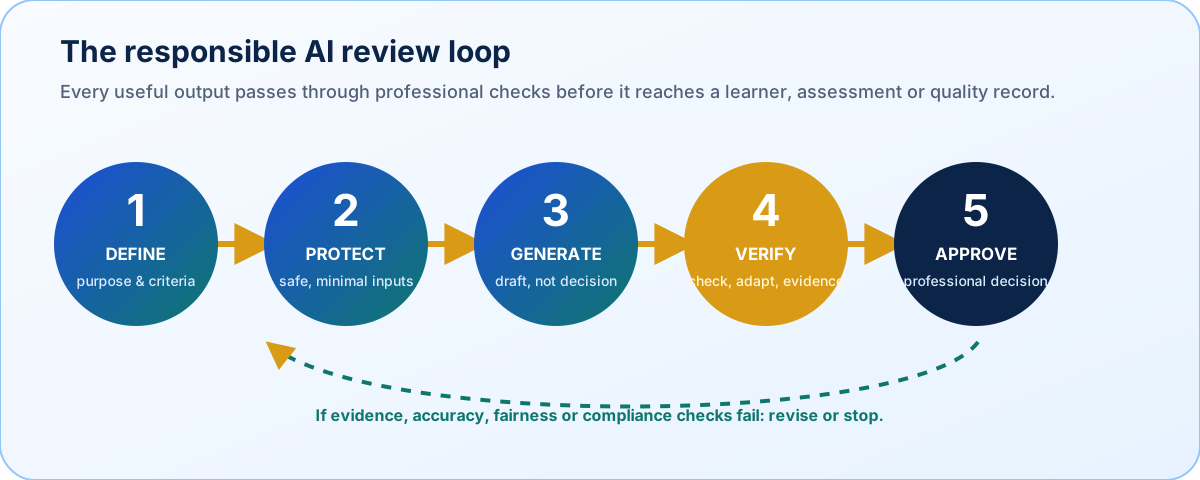
Five-step responsible AI process: define the purpose, protect information, generate a draft, verify and adapt it, then approve professional use
Generated content is never the end of the process. It must pass through evidence, accuracy, fairness, data and professional judgement checks.
HHF

Capability that remains useful as tools change.

The curriculum prioritises educational purpose, evidence, critical checking, data awareness and professional accountability over dependence on any one platform.

  • Explain AI capabilities, limitations and risks accurately.
  • Design prompts and critically evaluate generated outputs.
  • Create inclusive curriculum, learning and assessment resources.
  • Protect authenticity, academic integrity and occupational competence.
  • Support feedback, quality records and administration responsibly.
  • Apply GDPR, safeguarding, ethics and human-review controls.
  • Implement role-specific improvements supported by portfolio evidence.
Practical Implementation Portfolio

Participants produce evidence they can use and explain.

Each module contributes to a role-relevant portfolio demonstrating responsible application, critical review and measurable workplace value.

PLAN

Teaching or Assessment Plan

A mapped plan showing alignment, appropriate AI support and professional changes.

CHECK

Evaluated AI Output

An annotated output demonstrating fact-checking, source verification, bias review and judgement.

PROMPT

Reusable Prompt Library

Role-specific templates with inputs, output criteria, limitations and quality notes.

RISK

Risk and Compliance Record

A practical assessment covering data, safeguarding, ethics, accessibility and approval.

QA

Learner or Quality Resource

An inclusive resource, feedback example, evidence tracker or quality record.

ACTION

Implementation Plan

A prioritised action plan with ownership, success measures, review points and boundaries.

Everyday Education Benefits

How AI can support teaching, assessment and learner success.

The curriculum connects responsible AI practice to real educational work, helping staff prepare more effectively, respond to learner needs and reduce repetitive administration while retaining professional judgement.

01

Plan lessons more efficiently

Develop lesson structures, learning activities, retrieval tasks and knowledge checks aligned to approved curriculum outcomes.

02

Differentiate without lowering expectations

Create alternative explanations, scaffolds, examples and extension activities for learners with different starting points.

03

Support SEND learners

Prepare clearer layouts, visual sequences, plain-language versions and accessible formats for professional review and authorised support.

04

Strengthen curriculum alignment

Map outcomes, teaching activities and assessment evidence so gaps, duplication and progression are easier to identify.

05

Improve assessment design

Create question banks, authentic tasks and rubric drafts that assess genuine understanding and occupational competence.

06

Prepare better feedback

Structure constructive, criteria-linked feedback drafts while teachers and assessors retain responsibility for every judgement.

07

Develop engaging resources

Create scenarios, presentations, worksheets and discussion prompts adapted to the subject, level and learner group.

08

Reduce repetitive administration

Support meeting summaries, action plans, evidence trackers and quality records using approved information and human checking.

09

Build learner AI literacy

Help learners verify information, declare appropriate AI use and prepare for responsible work in AI-enabled industries.

Curriculum Journey

From organisational priorities to evidenced improvement.

HHF Training keeps the process simple, structured and focused on what your organisation needs.

1

Consultation

Discuss your setting, staff groups, priorities, concerns and intended professional outcomes.

2

Needs Review

Identify confidence levels, AI risks, policy gaps, assessment concerns and practical training needs.

3

Pathway Design

Select the shared, teacher, assessor, IQA and leadership modules relevant to each role.

4

Practical Application

Apply the curriculum to real educational tasks with examples, controls and professional review.

5

Impact Review

Review portfolio evidence, workplace actions and measures of quality, efficiency and learner benefit.

Frequently Asked Questions

Simple answers before your organisation books training.

These FAQs are written for decision-makers who need to understand whether the training is suitable for their staff.

Is this suitable for staff with no AI experience?

Yes. The training can start from the basics and explain AI in plain language. Staff do not need technical knowledge or previous experience with AI tools.

Can the curriculum be tailored to our organisation?

Yes. Module emphasis, examples, risks, portfolio tasks and professional pathways can reflect your vocational, FE or HE context and staff responsibilities.

Does the training cover assessment and learner misuse?

Yes. Assessment authenticity, AI-generated work, learner evidence, professional discussion and AI-resilient assessment practice can all be included.

Is leadership content included?

Yes. Module 12 provides an optional pathway for curriculum leads, quality leads, managers and senior leaders responsible for strategy, governance and implementation.

Do participants produce practical evidence?

Yes. The curriculum builds a role-relevant portfolio including a plan, evaluated AI output, prompt templates, risk record, professional resource and implementation plan.

Does AI replace professional judgement?

No. Teachers, assessors, IQAs and leaders remain responsible for educational, assessment, safeguarding, quality and compliance decisions.

CONTACT

Ready to future-proof your organisation?

Speak with HHF Training about AI training, cyber safety, CPD, assessment design, quality assurance or digital transformation support.